
Depression can make even easy days feel hard. Just getting up can feel tough. Smiling might feel fake. And your drive just vanishes. If you’re reading this to find affirmations for depression, you’re not weak—you’re searching for help, and that’s what counts.
Positive affirmations won’t fix depression. Science says so. But studies also show that talking to yourself nicely, changing your thinking, and managing your feelings can help your mental health if you also use good coping methods and get professional help.
This article explains how affirmations work, when they help, and how to use them safely. You will also find 50+ carefully written affirmations for depression, anxiety, and emotional exhaustion—created with compassion, realism, and psychological logic.
Important note: If depression feels overwhelming or persistent, please reach out to a mental health professional or trusted support service. Affirmations work best as support, not replacement.
What Are Affirmations for Depression?
Affirmations are intentional, positive statements that help redirect unhelpful thought patterns. In depression, the mind often repeats negative beliefs like:
- “I’m not good enough”
- “Nothing will ever change”
- “I am a burden”
Affirmations gently interrupt those loops.
According to research published by the American Psychological Association, self-affirmation can reduce stress, improve emotional resilience, and help people cope with difficult experiences when used consistently and realistically.
Affirmations do not deny pain. They acknowledge it and offer a safer mental direction.
Do Positive Affirmations Actually Help Depression?
This is a fair question—and the answer matters.
Studies from Harvard Medical School and Stanford University show that positive self-talk can activate brain regions linked to self-processing and emotional regulation. When practiced regularly, affirmations may:
- Reduce rumination
- Improve self-compassion
- Support stress management
- Strengthen emotional coping skills
However, experts also warn against toxic positivity. Saying “I am happy” when you feel deeply depressed can backfire. That is why the affirmations in this article focus on acceptance, safety, and progress, not unrealistic happiness.
How Affirmations Support Anxiety and Depression Together
Depression and anxiety often overlap. Anxiety brings fear, restlessness, and overthinking. Depression brings exhaustion, numbness, and hopelessness. Many people experience both at the same time.
That’s why positive affirmations for anxiety and depression focus on:
- Grounding the nervous system
- Creating emotional safety
- Encouraging patience instead of pressure
Affirmations help by slowing down mental spirals and reminding the brain that this moment is survivable.
How to Use Daily Affirmations for Depression (Safely)
Using affirmations correctly matters more than using many.
Best practices recommended by therapists:
- Say them out loud or silently, once or twice daily
- Use a calm tone, not forced excitement
- Pair affirmations with slow breathing
- Choose statements that feel possible, not perfect
Short daily routines work better than long sessions. One minute done daily beats twenty minutes done once.
50+ Affirmations for Anxiety & Depression
These affirmations are designed to feel human, not fake. Read them slowly. You do not need to believe them fully right away.
Core Affirmations for Depression
- I am allowed to take things one step at a time.
- My feelings are real, and they matter.
- I do not need to rush my healing.
- I am doing the best I can today.
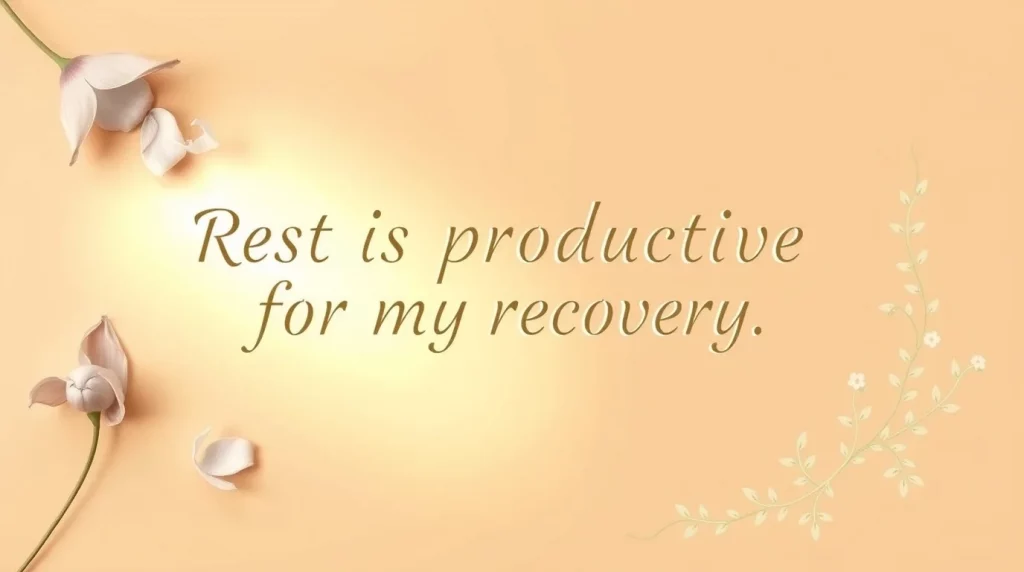
- Rest is productive for my recovery.
- I am not broken; I am human.
- This feeling will not last forever.
- I give myself permission to feel without judgment.
- I deserve care, even on hard days.
- I am learning how to support myself.
Daily Affirmations for Depression
- Today, I choose gentle progress over pressure.
- I can handle this moment.
- I allow myself to move at my own pace.
- Small efforts still count.
- I show myself compassion today.
- I am allowed to ask for help.
- I do not need to have all the answers.
- My worth does not depend on productivity.
- I trust myself to survive today.
- I honor my energy levels.
Affirmations for Anxiety and Depression
- I am safe in this moment.
- I can breathe through discomfort.
- My thoughts do not control me.
- I release the need to predict the future.
- I can slow down when my mind races.
- I ground myself in the present.
- I allow calm to enter gradually.
- I am learning to feel secure again.
- I trust my body to protect me.
- I am not alone in this experience.
Positive Affirmations for Depression (Hope-Focused)
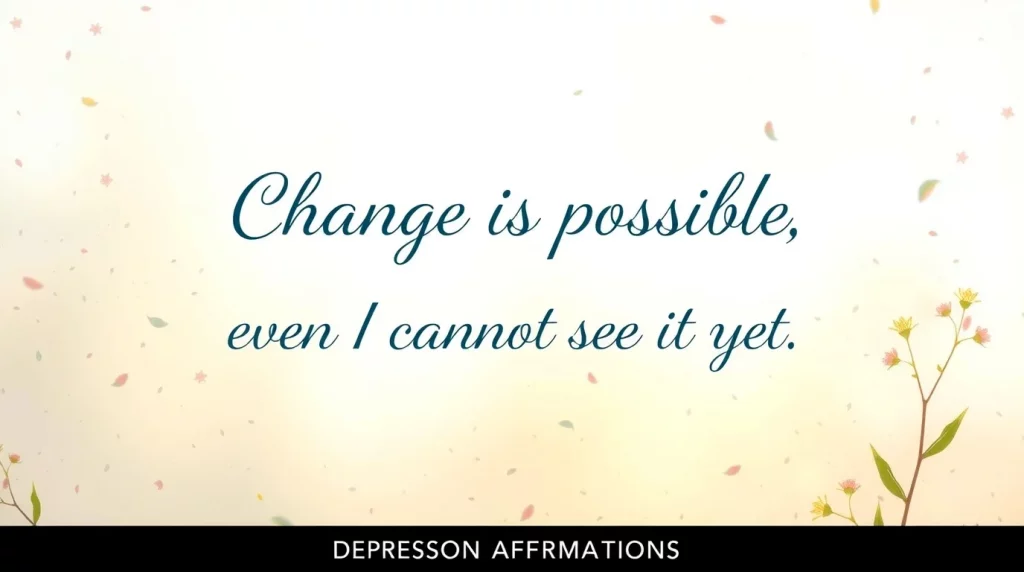
- Change is possible, even if I cannot see it yet.
- I am open to moments of relief.
- Healing happens in layers, not overnight.
- I can grow stronger through patience.
- I welcome support into my life.
- I am worthy of hope.
- I believe in my ability to heal.
- My story is still unfolding.
- I allow light to return slowly.
- I trust the process of recovery.
Affirmations Inspired by Louise Hay (Depression-Friendly)
Louise Hay emphasized self-love and emotional responsibility, but even her work encourages kindness over force.
- I choose thoughts that support my well-being.
- I release self-criticism with compassion.
- I am willing to learn how to love myself.
- I forgive myself for past pain.
- I deserve emotional peace.
- I am open to inner healing.
- I trust life to support me.
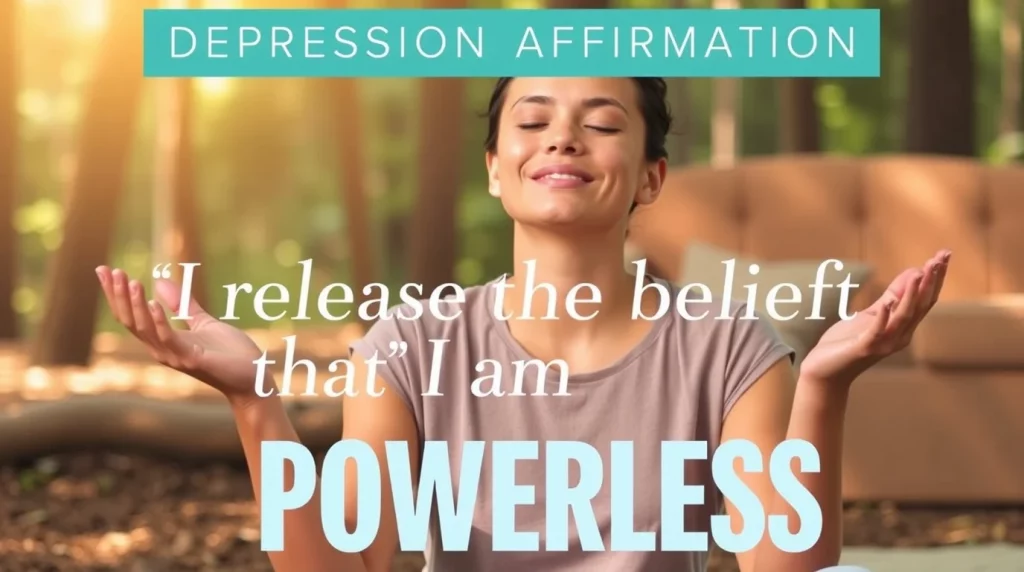
- I release the belief that I am powerless.
- I accept myself exactly as I am today.
- I move toward healing with love.
Extra Gentle Affirmations
- It is okay to start again tomorrow.
- I honor my survival.
- I am allowed to feel tired and still be worthy.
- I am stronger than this moment.
- I choose patience over self-judgment.
Why Louise Hay’s Work Is Still Relevant for Depression
Louise Hay played a major role in introducing affirmations to mainstream self-help culture. Her teachings focused on the connection between thought patterns and emotional health.
While modern psychology does not support all mind-body claims from early self-help movements, mental health professionals still recognize the value of:
- Self-compassion
- Thought awareness
- Emotional responsibility
Used wisely, Louise Hay–style affirmations can support emotional resilience without replacing therapy.
Common Mistakes People Make with Affirmations for Depression
Let’s be honest. Affirmations fail when people use them incorrectly.
Avoid these mistakes:
- Forcing positivity when you feel numb
- Repeating affirmations you strongly reject
- Using affirmations instead of seeking help
- Expecting instant results
Affirmations work slowly. Think of them like physical therapy for the mind.
What Science Says About Depression and Self-Support Tools
Trusted organizations like:
- National Institute of Mental Health (NIMH)
- World Health Organization (WHO)
- American Psychological Association (APA)
All agree that depression responds best to a combination of approaches, including:
- Therapy
- Lifestyle support
- Social connection
- Cognitive tools (like affirmations)
Affirmations fit into the self-care and emotional regulation category, not medical treatment.
When to Seek Professional Support
If depression includes:
- Persistent sadness
- Loss of interest
- Thoughts of self-harm
- Emotional numbness lasting weeks
Please seek professional care. Using affirmations alongside therapy can enhance outcomes, but support matters more than silence.
Final Thoughts: Affirmations Are a Beginning, Not a Finish Line
Affirmations for depression are not magic spells. They are small reminders that you matter, even when your mind tells you otherwise.
Some days, an affirmation may feel pointless. Other days, it may feel like a lifeline. Both experiences are valid.
Progress does not require perfection. It requires patience, honesty, and care.
If this article helped you feel even 1% lighter, then it did its job.